


Whether you're replacing a single lamp, upgrading a warehouse, or planning a large commercial lighting project, you'll encounter a variety of technical terms on product pages and specification sheets. Understanding what these terms mean can help you select the right products, avoid costly mistakes, and achieve better lighting performance.
At Geller Lighting Supply, we've spent more than 40 years helping contractors, facility managers, business owners, and maintenance professionals find the right lighting solutions. Below are some of the most common lighting terms you'll encounter and why they matter.
Wattage
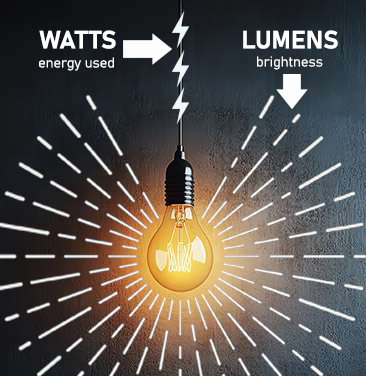
Wattage measures the amount of electrical power a lamp or fixture consumes. Many people mistakenly associate wattage with brightness, but that is no longer the case with modern LED technology. LEDs can often produce the same amount of light as older incandescent or HID sources while using significantly less power.
For example, a modern LED high bay may consume only 150 watts while producing light output comparable to a much higher wattage metal halide fixture. Lower wattage generally means lower energy costs, making it an important factor when evaluating operating expenses. Understanding wattage helps businesses estimate energy savings when considering lighting upgrades.
Lumens
Lumens measure the total amount of light produced by a lamp or fixture. Unlike wattage, which measures energy consumption, lumens indicate brightness.
When comparing LED products, lumens are often the best way to evaluate how much light you will receive. For example, a small decorative lamp may produce only a few hundred lumens, while a commercial high bay fixture may produce tens of thousands of lumens. Products in Geller Lighting Supply's high bay category can provide the powerful light output required for warehouses, manufacturing facilities, and large open spaces.
As LED technology has evolved, lumens have become one of the most important specifications to review when selecting lighting products.
Voltage
Whereas watts measure the total amount of power a lamp or fixture consumers, voltage refers to the electrical pressure (or "push") required to operate a lamp or fixture. Different products are designed for different voltage ranges, and selecting the wrong voltage can prevent a fixture from operating properly or even cause damage.
Residential applications commonly use 120 volts, while commercial and industrial facilities may use 208, 240, 277, or 480 volts. Many commercial LED fixtures today are available with universal voltage drivers that can operate across multiple voltage ranges. Before ordering replacement fixtures, it is always important to verify the voltage available at the installation location.
Color Temperature
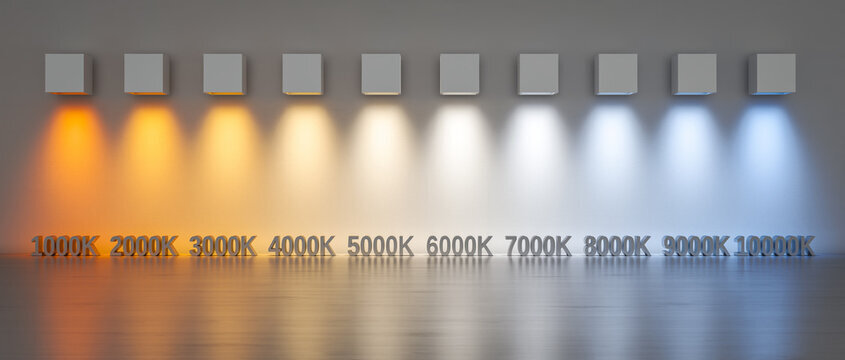
Color temperature describes the appearance of light and is measured in Kelvin (K). Lower Kelvin ratings produce warmer, more yellow-toned light, while higher Kelvin ratings create cooler, whiter light.
A 2700K lamp often creates a warm and inviting atmosphere commonly found in homes, restaurants, and hospitality settings. A 4000K lamp provides a neutral white light that works well in offices, schools, and retail environments. A 5000K fixture delivers a daylight-like appearance that is frequently used in warehouses, parking lots, and industrial facilities where visibility is a priority.
Understanding color temperature can dramatically impact how a space feels and functions. Choosing the appropriate color temperature helps improve comfort, productivity, and visibility.
Bulb Base
The bulb base refers to the portion of a lamp that physically connects to the fixture socket. Different lamps use different base types, and compatibility is essential when selecting replacement bulbs.
One of the most common bases is the medium E26 base found in many residential and commercial applications. Other common bases include candelabra E12, mogul E39, GU24, GU10, and various pin-based configurations used in specialty fixtures. Even if two lamps appear similar, they may have different base types and may not fit the same fixture.
When replacing lamps, verifying the base type before ordering can save time and eliminate unnecessary returns.
Life and Average Hours
Life expectancy, often listed as average rated hours, estimates how long a lamp or fixture is expected to operate under normal conditions. This specification helps buyers understand the long-term maintenance requirements associated with a product.
Traditional incandescent lamps often lasted around 1,000 hours, while many modern LED products are rated for 25,000, 50,000, or even 100,000 hours. Longer-rated products can significantly reduce maintenance costs, especially in applications where fixture access requires lifts, scaffolding, or specialized labor.
While actual performance depends on operating conditions, average rated life remains one of the most useful indicators when comparing long-term value between products.
Beam Angle
Beam angle describes how widely light is distributed from a lamp or fixture. It is measured in degrees and can have a significant impact on lighting performance.
A narrow beam angle concentrates light into a focused area, making it ideal for accent lighting, displays, and highlighting architectural features. A wider beam angle spreads light across a larger area and is often preferred for general illumination. In commercial and industrial environments, selecting the correct beam angle helps ensure consistent light coverage while minimizing dark spots and glare.
For example, high bay fixtures installed in warehouse aisles may utilize different optical distributions than fixtures intended for wide open spaces. Understanding beam angle allows lighting designers and facility managers to create more effective lighting layouts.
Making Sense of Lighting Specifications
Lighting terminology can seem complicated at first, but understanding a few key specifications can make product selection much easier. Whether you're evaluating lamps, fixtures, controls, or complete lighting systems, knowing how wattage, voltage, color temperature, lumens, bulb bases, rated life, and beam angle work together can help you make informed decisions.
At Geller Lighting Supply, we've been helping customers navigate lighting specifications and product selection for more than four decades. If you have questions about a replacement lamp, fixture upgrade, or commercial lighting project, our team is here to help you find the right solution.